
Heavy-duty cleaning and floor work for distribution, logistics and 3PL facilities, handled around your shifts so nothing slows down.
Tell us about your facility. We respond same business day.
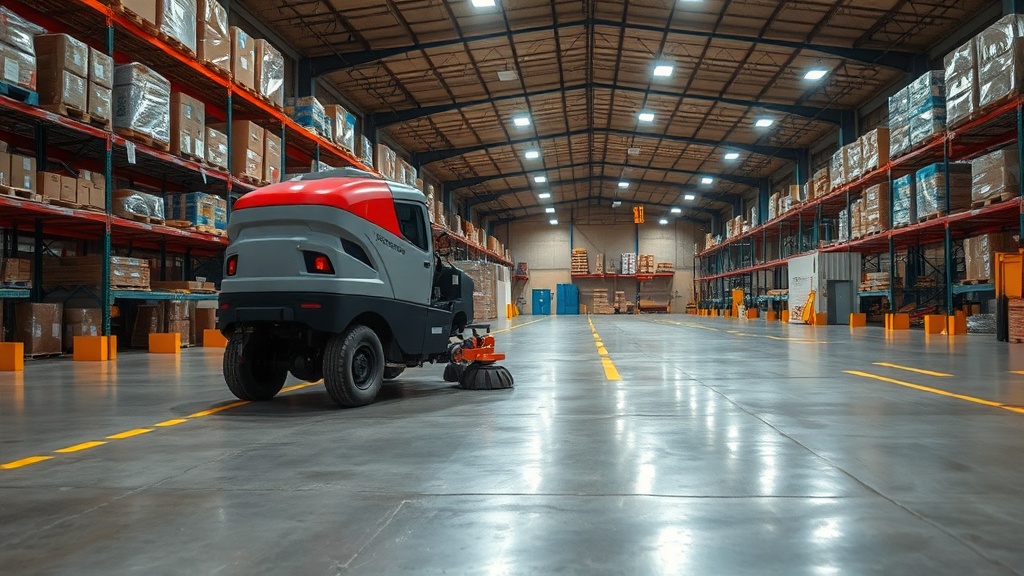
Every program is tailored after a walkthrough. A typical warehouse & floor care scope includes:
We assess current floor condition, surface type, soil load, and what equipment can safely access which areas before recommending a program.
We map your receiving, shipping, and break schedules to build a cleaning window that keeps equipment off your active floor during peak movement.
The first service addresses built-up grime, dock residue, and any existing floor damage so the baseline is clean before maintenance begins.
Auto-scrubbing runs on a set schedule tied to your facility's traffic; dock areas and restrooms are serviced separately on their own cadence.
Family-owned since 2003. 11 local offices. Here's what that track record means for your facility.
Equipment is matched to your floor layout and aisle configuration after an on-site assessment. Ride-on scrubbers for open distribution floors. Walk-behind for narrow aisles and cold-storage configuration. The equipment fits the facility.
Scrubbers and forklifts don't mix. We map your receiving, shipping, and break windows before writing the cleaning schedule so equipment is never competing with active floor traffic. Your production doesn't stop for our crew.
A wet mop moves soil around. An auto-scrubber with a squeegee system picks it up, contains it, and leaves a dry floor behind. For distribution floors with heavy forklift and pallet jack traffic, that difference is a slip-hazard matter.
Unsealed concrete in a warehouse generates constant airborne dust that lands on racking, inventory, and HVAC filters. Concrete sealing eliminates that at the source and makes auto-scrubbing significantly more effective on every subsequent visit.
Warehouse cleaning breaks into three distinct work types: floor maintenance (auto-scrubbing on a set frequency), dock and bay cleaning (hosed down, debris cleared, drain covers checked), and facility support (restrooms, breakrooms, racking dusting). Each runs on its own schedule because the access windows and equipment are completely different.
For floor work, ride-on scrubbers (typically 28"–36" cleaning path) are right for open distribution floors with 10'+ aisle widths. Walk-behind units handle narrower configuration or areas around conveyor equipment. Concrete sealing is a separate project (usually done once, with a maintenance recoat every 2–3 years) and it dramatically reduces dust accumulation between scrubs. If your facility has VCT in office or break areas, those get a strip-and-wax cycle on their own schedule.
Loading dock areas need their own treatment: power washing or heavy-duty mopping to clear tire rubber, pallet debris, and dock plate residue. Safety line inspection and repainting is something we flag during floor work. Faded aisle markers and pedestrian zones are a compliance issue that often gets deferred until it becomes a problem. We'll note it in your client portal when we see it.
In warehouse and distribution facilities, inconsistent cleaning costs money. Dust accumulation creates safety violations. Dirty docks slow inspections. Slip hazards become liability. We scope warehouse programs around your shift schedule so scrubbers stay off the active floor during production, and our crews work around racking without touching your inventory.
Not sure if it fits your facility? Tell us about your site and we'll scope it honestly.
These aren't marketing claims. They're the actual protocols your facility is cleaned to.
We run auto-scrubbers in facilities from 20,000 sq ft to 500,000+ sq ft. Equipment selection (walk-behind vs. ride-on) depends on aisle width and floor layout.
Yes. Our warehouse crews are trained to work around loaded racking, floor markings, and safety zones. We don't move product.
Emergency callout for spills is available. For facilities with frequent spill risk, we can build a day-porter or on-call response into your program.
High-traffic distribution floors typically need auto-scrubbing 2–3x per week. Lighter-use storage facilities can often run weekly. We'll recommend a frequency after the assessment.
Every industry has its own cleaning requirements. See how we scope this service for your facility type.
Each office page below is a location-specific service page with the local crew, phone number, office address, and market context for that service.
Nightly and recurring janitorial that keeps your space sharp for staff, clients and guests. Same trained crew every shift, cleaned to the ISSA 540 standard, with a monthly QA inspection so quality doesn't drift.
ExploreRecurring janitorial built around your building: your scope, your schedule, your standards. One point of contact, documented visits, and the same dependable crew night after night.
ExploreDisinfection-first cleaning for clinics, dental, outpatient and surgery facilities, to protocol, with color-coded tools to prevent cross-contamination and optional UV/ATP verification.
Explore