
High-traffic venues with 20,000+ guests need cleaning programs built for event cycles, not office schedules.
Tell us about your facility. We respond same business day.
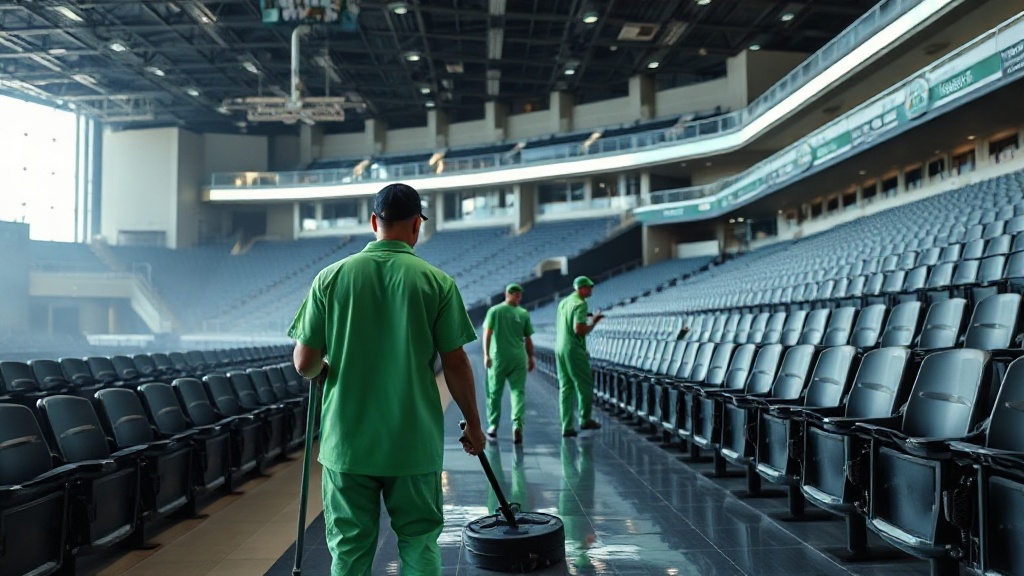
Concourses, restrooms, suites, and press areas all need to be guest-ready before the next event. The turnaround window is fixed by the event calendar.
Handrails, seat armrests, concession counter surfaces, and restroom fixtures see thousands of touches per event. Protocol matters more than headcount.
Large venues divide naturally into concourses, suites, locker rooms, press areas, and back-of-house. Cleaning crews need zone assignments and shift coordination that matches the venue layout.
Arena and stadium cleaning operates on an event cycle, and every phase of that cycle carries different requirements. Pre-event preparation covers restocking restrooms, wiping down seating, clearing debris from the previous day, and confirming concession areas are sanitation-compliant before gates open. Post-event reset is the primary work window: concourses, restrooms, suites, press areas, and back-of-house all get cleaned in the hours after the final buzzer or last set. Off days and dark days are when deep cleaning happens: floor scrubbing, pressure washing concourse surfaces, restroom fixture descaling, and locker room disinfection that the compressed post-event window cannot accommodate. A program that only addresses one phase leaves gaps the next event exposes.
High-contact surface sanitation at scale follows EPA-registered disinfectant protocols with documented contact times. In a venue with 20,000 seats, the sheer number of handrails, seat armrests, restroom fixtures, and concession counter surfaces means that a crew without a written protocol will miss surfaces or cut dwell times short. EPA-registered disinfectants require a defined wet contact time to achieve the kill claim on the label. Wiping a surface before that time elapses renders the disinfectant ineffective. In high-traffic venues with food service areas, local health department requirements add another compliance layer for concession surface sanitation that general commercial cleaners often overlook.
Crew logistics in a large venue require the same planning discipline as venue operations. Zone assignments map crews to concourses, suites, locker rooms, press areas, and entry plazas before the shift starts. Shift timing aligns with event load-out so crews can enter zones as the crowd clears, rather than waiting for a venue-wide clear. A supervisor on-site coordinates zone completion, handles exceptions, and does a readiness walkthrough before doors open for the next event. Communication with venue operations keeps the cleaning crew and event production team aligned on load-in schedules, rental equipment placement, and any post-event damage that affects the cleaning plan.
A mid-size indoor arena hosting a professional basketball team needed post-game cleaning completed before morning skate for a hockey team the following day. The window from final buzzer to ice resurfacing crew arrival was under five hours. We assigned zone crews to concourses, suites, and restrooms simultaneously, with a supervisor doing a section-by-section sign-off as each zone cleared. Concession areas and press box were handled last, after equipment breakdown. The venue operations director confirmed readiness before the first Zamboni run.
A Green Clean Janitorial client
EPA-registered disinfectants with documented contact times apply to all high-contact surfaces. ISSA 540 cleaning protocols govern systematic coverage. Event venues with food service areas follow local health department requirements for concession surface sanitation.
Recurring janitorial built around your building: your scope, your schedule, your standards. One point of contact, documented visits, and the same dependable crew night after night.
ExploreOn-site daytime coverage that keeps lobbies, restrooms and common areas guest-ready all day. A consistent, uniformed presence in your building.
ExploreStrip-and-wax, burnishing, carpet extraction and hard-surface restoration that protects your investment, scheduled around your facility, including during breaks.
ExploreWe staff to the turnaround window, not a generic headcount. Zone assignments are mapped before the event ends so crews can move in as sections clear. A supervisor tracks zone completion in real time and does a final walkthrough before the next event opens to confirm every area is guest-ready.
Yes. Post-event cleaning is the primary work: concourses, restrooms, suites, and back-of-house after the crowd clears. Pre-event preparation is a lighter scope, covering restroom restocking, seating wipe-down, and entry area prep in the hours before gates open. The two scopes have different crew sizes and timing, and we can coordinate both under one program.
A full stadium cleaning program covers concourses, suites, restrooms, the press box, locker rooms, concession areas, and entry plazas. Each zone has its own cleaning sequence and completion criteria. The scope is built around your venue layout and event calendar so no area is treated as an afterthought.
Yes. Event porter coverage during the event handles restroom checks, spill response, and concourse upkeep while guests are in the building. Event porters are stationed at high-traffic areas and cycle through restrooms on a defined interval. This is separate from the post-event crew and keeps the venue in acceptable condition throughout the event, not just before and after.
Family-owned since 2003. 11 local offices. Same crew, every shift.